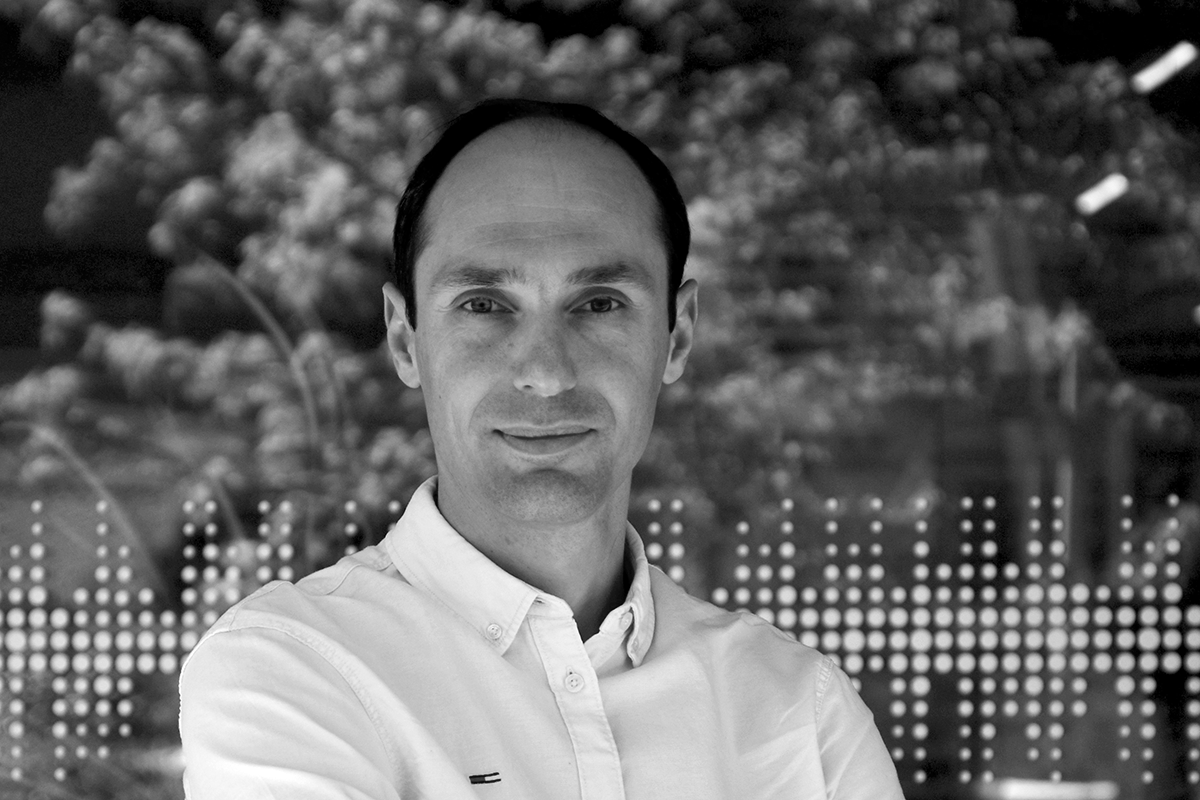

Congratulations to Professor Thierry Couffinhal, VBHI Deputy Director for “Biomedical Innovation” and Director of the Inserm–University of Bordeaux laboratory Biology of Cardiovascular Diseases, on being awarded an Academic Palm by the University of Bordeaux.
The Academic Palms
This prestigious distinction honours the women and men who contribute to university life. While it is now widely recognised, its origins are less well known: established in 1808 by Napoleon I, it is one of the oldest and most distinguished awards in the fields of education and culture in France, although it is purely honorary.
The Academic Palm is awarded following a recommendation by a council attached to the Minister of National Education, and is then formalised by decree of the Prime Minister. It comprises three ranks—Knight, Officer and Commander—granted according to seniority. It recognises staff members and any individual who has made an outstanding contribution to education, research or culture, regardless of nationality.
Two promotion rounds take place each year, on 1 January and 14 July. At the University of Bordeaux, nominations are submitted to the President, then forwarded to the Rectorate and the Ministry.
A career spanning clinical practice and research
A cardiologist at Bordeaux University Hospital and Professor at the University of Bordeaux, Professor Thierry Couffinhal has built a career at the interface of clinical care and cardiovascular biology research. Trained at the Faculty of Medicine in Toulouse, he obtained in 1994 both a doctorate in medicine (cardiology) and a doctorate in biological and health sciences from the University of Bordeaux, and very early on turned his attention to translational research. After completing his doctoral work within an Inserm research unit, he undertook a postdoctoral fellowship in Boston in the laboratory of Dr J.M. Isner, a pioneer of cardiac gene therapy.
Returning to France in 1996, he pursued his academic hospital career in Bordeaux: first as a clinical assistant, then as a hospital practitioner at Haut-Lévêque Hospital in 2000, before being appointed Professor of Cardiology and hospital practitioner in 2004. That same year, he established his own Inserm research group, focusing on the cellular and molecular mechanisms of vascular maturation. He subsequently led several research units and has headed the “Biology of Cardiovascular Diseases” unit (Inserm–University of Bordeaux) since 2011.
In parallel, he has developed a major clinical activity, leading since 2001 the Centre for the Exploration, Prevention and Treatment of Atherosclerosis (CEPTA) at Bordeaux University Hospital. His internationally recognised research focuses on endothelial biology and the mechanisms underlying vascular diseases, particularly cerebral small vessel disease, a major public health challenge.
His team has made significant contributions, notably:
- the development of experimental models of angiogenesis,
- innovative 3D imaging approaches to microvascularisation, and
- the identification of key signalling pathways (Wnt/Frizzled) involved in cardiovascular and neurovascular diseases,
- the role of Trim47 in cognitive disorders.
More recently, his work has explored the role of endothelial dysfunction in heart failure and cognitive disorders, opening up new perspectives for prevention and therapeutic targets.
Professor Thierry Couffinhal is also the lead for the “VBHI – Interdisciplinary Catalyser” flagship programme, an accelerator for biomedical innovation aimed at developing future treatments for cerebral small vessel disease through a precision medicine approach.
Further information:
- Article on the Academic Palms award ceremony (University of Bordeaux intranet)
- French Official Bulletin of Decorations, Medals and Awards, No. 5, 1 September 2025
- Website of the Association of Members of the Order of Academic Palms (AMOPA)
EM