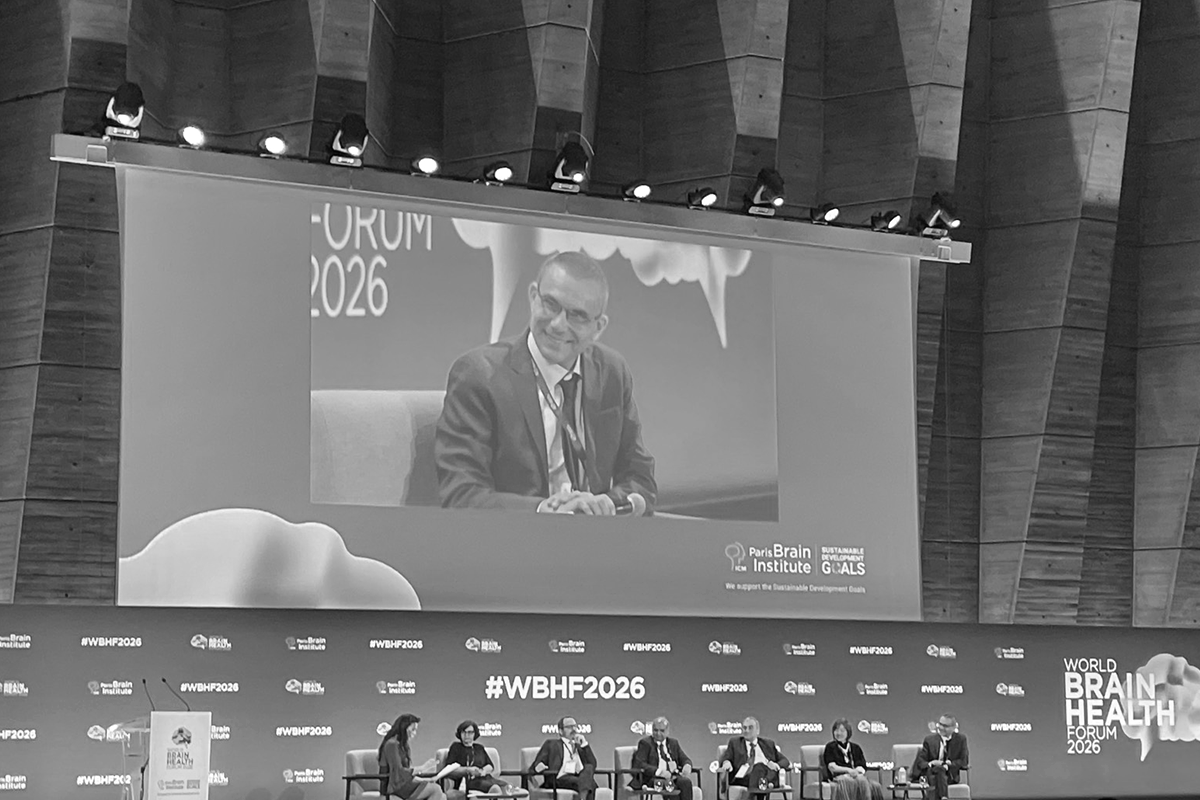
VBHI was recognised and widely represented at the World Brain Health Forum held in Paris on 15 January.
The first World Brain Health Forum
Brain health is one of the major challenges of the 21st century. Neurological and mental disorders affect one in three people worldwide and represent the leading cause of disability. Beyond disease, brain health encompasses cognitive, emotional, behavioural and motor functions, and plays a key role in economic and social development.
Despite major scientific advances, prevention and treatment solutions remain insufficient. However, recent progress in neuroscience, digital technologies and artificial intelligence is opening up unprecedented opportunities.
In this context, VBHI was invited to take part in the World Brain Health Forum. Organised by the Paris Brain Institute and its Director General, Professor Stéphanie Debette, founder and former Director of the VBHI, this event brought together clinicians, researchers, public decision-makers, international organisations and industry representatives in January in Paris, with the aim of fostering international collaboration and translating scientific discoveries into therapies, prevention strategies and evidence-based public policies.
The Forum also marked an important step in strengthening political engagement in support of brain health at a global level.
VBHI highlighted
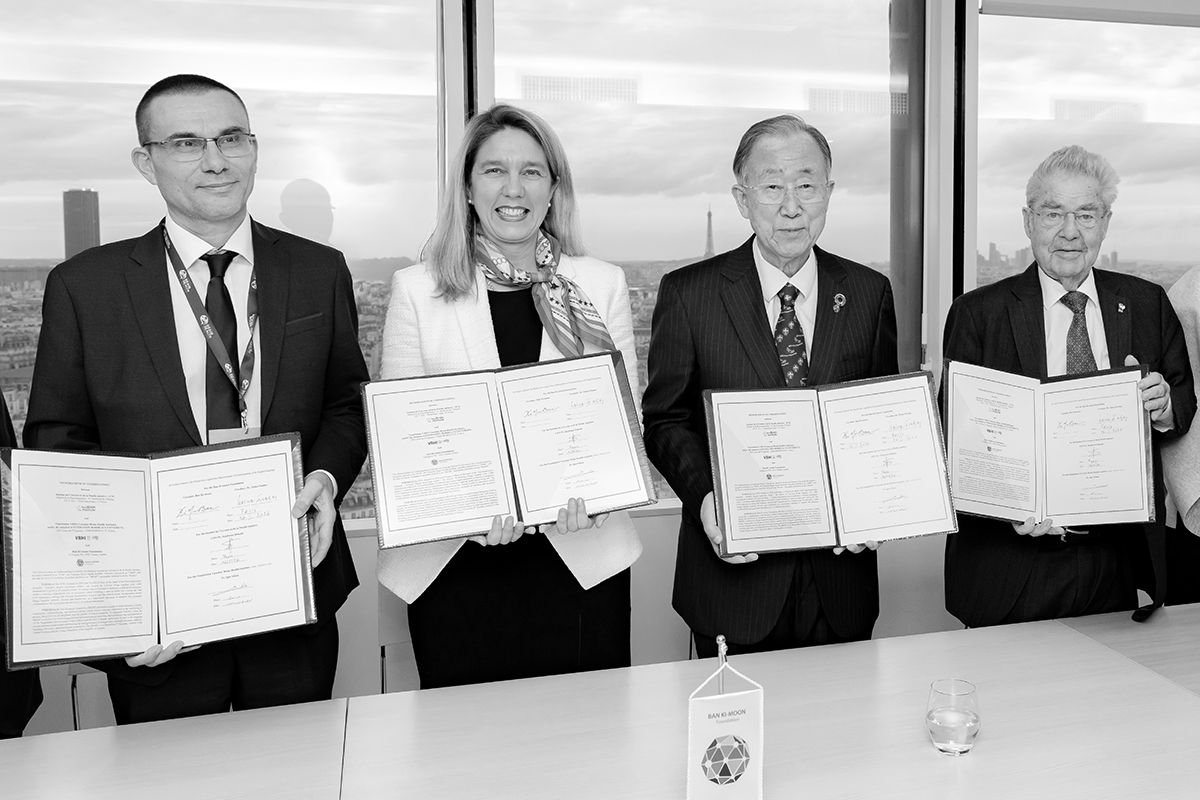
In his inaugural address on global and cross-sector partnerships on January 15, His Excellency Ban Ki-moon, 8th Secretary-General of the United Nations, highlighted VBHI, expressing his strong support for the newly launched Global Brain Care Scholars Program.
This international initiative is jointly led by the Ban Ki-moon Foundation, the Vascular Brain Health Institute (VBHI), and the Paris Brain Institute (ICM), in collaboration with the Global Brain Care Coalition and the Global Brain Health Institute. The program aims to train and empower local brain health champions in the Global South, addressing the growing global burden of stroke, dementia, and depression.
Professor Jonathan Rosand, Founder of the Global Brain Care Coalition, and Neurology Professor at Harvard Medical School, JP Kistler Endowed Chair, Massachusetts General Hospital, also expressed his motivation and support for the new program, while praising VBHI’s ambition.
VBHI was represented notably by Professor Igor Sibon, Interim Director of VBHI; Professor Katerina Akassoglou, member of the VBHI Scientific Advisory Board; Dr Maëlenn Guerchet, member of the VBHI Board of Directors; and Professor Stéphanie Debette, VBHI Omics referent and initiator of the event.
Professor Thierry Couffinhal, Deputy Director for Biomedical Innovation at VBHI, was also present at the venue.
Professor Katerina Akassoglou was one of the keynote speakers in Session 2, “Accelerating therapies and prevention”.
Dr Maëlenn Guerchet co-chaired Session 5, “Global, multilateral and multistakeholder approaches to brain health”, during which Professor Igor Sibon took part in the roundtable discussion “Levers for Action towards Equitable Brain Health”.
VBHI strategic directions shared by its Director
By 2050, more than two thirds of people affected by brain disorders will live in countries of the Global South. International and transcontinental partnerships can accelerate progress by pooling data, resources and expertise.
During his intervention, Professor Sibon highlighted key priorities for the international community:
- The development of low-cost tools to study brain structure, with a focus on low-field MRI (the subject of Low Field Neuro 2025, co-organised by VBHI), and potentially other techniques such as retinal imaging as a marker of cerebral vascular integrity (see our related news item).
Professor Sibon also took part in a closed panel discussion on the morning of 16 January, attended by senior political and scientific figures. These discussions aim to lead to recommendations for the implementation of actions in support of global brain health. Professor Sibon highlighted several key priorities for the international community:
- The need to improve education and training for physicians and scientists in countries of the Global South, as well as the opportunity offered by the Global Brain Care Scholar programme.
- The importance of improving public education to strengthen primary prevention of brain health through better control of vascular risk factors.
- The opportunity to develop new research and intervention programmes as close as possible to patients’ real-life environments, with a particular focus on the potential use of “living labs” (for example, improving the detection and management of hypertension in people living in rural areas with limited access to medical resources).
Further information:
EM