On Wednesday 25 November 2026, the VBHI and the Department of Health Sciences and Technologies at the University of Bordeaux will host a one-day event in Bordeaux dedicated to technological advances that are helping us better understand stroke and cerebral small vessel disease.
New Tools, Discussions and Workshop
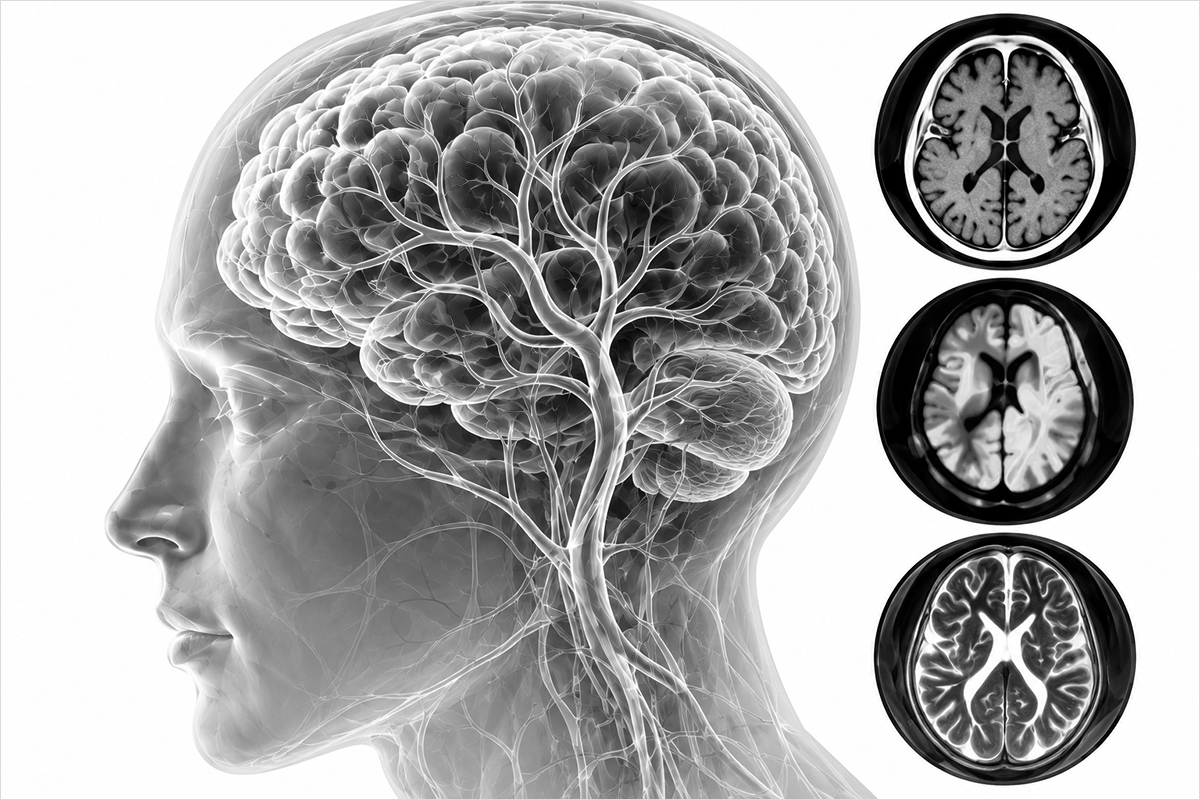
Stroke and cerebral small vessel disease are among the leading causes of disability and dementia. New tools are transforming our understanding of these conditions, including AI-assisted imaging, lesion–deficit mapping, brain reference charts and digital twins.
This event will bring together international experts and Bordeaux-based research teams to explore how these advances can help predict recovery, detect risk at an earlier stage and guide patient care.
Speakers from University College London, the University of South Carolina and the University of Lisbon will join researchers from the University of Bordeaux, the CNRS, Inserm and Bordeaux University Hospital.
Presentations will cover lesion mapping, brain age and lifespan models, receptor and metabolic signatures of vascular damage, and the role of lifestyle in dementia prevention.
The day will conclude with a hands-on workshop on browser-based neuroimaging analysis using Neurodesk Play (please bring a laptop), followed by a panel discussion.
This event is open to researchers, clinicians and students interested in brain imaging, stroke and cerebrovascular health.
The event is organised by Dr Michel Thiebaut de Schotten, Deputy Director of VBHI, and Professor Thomas Tourdias, a member of the VBHI Executive Committee, with support from the IdEx funding scheme for events run by the Department of Health Sciences and Technologies.
Programme
- 8:45 Welcome coffee
- 9:00 Opening, Thomas Tourdias
Session 1: Invited lectures
- 9:10 to 9:50: Leonardo Bonilha, University of South Carolina School of Medicine. Beyond the lesion: brain age, cortical hierarchy and digital twins to predict recovery after stroke
- 9:50 to 10:30: Parashkev Nachev, UCL Queen Square Institute of Neurology. Human brain lesion-deficit inference solved
- 10:30 to 10:45: Coffee break
- 10:45 to 11:25: Chris Rorden, McCausland Center for Brain Imaging, University of South Carolina. Open, fast and transparent: accessible AI and robust inference for lesion mapping
- 11:25 to 12:05: Cécilia Samieri, Bordeaux Population Health (Inserm-University of Bordeaux). Feeding the vascular brain: lifestyle, metabolomic signatures and dementia prevention in the Three-City cohort
- 12:05 to 12:45: Pierrick Coupé, LaBRI (CNRS, University of Bordeaux, Bordeaux INP, Inria). Brain charts for brain health: lifespan models of anatomy, from volBrain to early risk detection
- 12:45 to 13:45: Lunch
Session 2: Vascular brain health in Bordeaux
- 13:45 to 14:25: Thomas Tourdias, CHU de Bordeaux; Neurocentre Magendie. Integration of advanced imaging tools to guide stroke patient care
- 14:25 to 15:05: Ami Tsuchida, University of Bordeaux. Mapping early cerebral small vessel disease (cSVD): AI-driven detection, multimodal signatures, and functional impact
- 15:05 to 15:45: Pedro Alves, Universidade de Lisboa. Mapping receptor disruption in stroke and predicting treatment efficiency
- 15:45 to 16:00: Coffee break
- 16:00 to 16:40: Anne-Karine Bouzier-Sore, RMSB (CNRS – University of Bordeaux). Lactate in the brain: from neurometabolic and neurovascular coupling to neuroprotection
Session 3: Hands-on
- 16:40 to 17:40: Chris Rorden, workshop. Neuroimaging analysis in the browser with Neurodesk Play (bring a laptop)
- 17:40 to 18:00: Round table and closing
Practical information
- Date: Wednesday 25 November 2026, 8.45 am–6 pm
- Venue: Conference Room, IBIO Building, Carreire Campus, University of Bordeaux
- Registration: Paid event; registration is compulsory and places are limited: https://www.helloasso.com/associations/neuroscience-alliance-neural/evenements/the-future-of-neurovascular-health-25-november
Contact: michel.thiebaut@gmail.com
EM